
our approach
Be you with purpose
Thinking differently
Leadership is not a personality type. It’s a set of skills. And skills can be learned.
At Archway, we believe the world has a leadership problem. Not because there aren’t enough leaders, but because we’ve been teaching leadership wrong. Too much emphasis on authority. Too much focus on a specific “type.” Too little attention paid to the relationships that actually make teams work.
Our approach is different. It’s built on research-backed frameworks, real-world application, and a core belief that you lead best when you’re genuinely yourself. Here’s what that looks like in practice.
Be You With Purpose (BYWP) Leadership
This is the foundation of everything we teach. Effective leadership doesn’t require a specific personality, a commanding presence, or decades of experience. It requires self-awareness and intentionality.
BYWP is about understanding your own strengths, quirks, and tendencies and learning how to channel them in service of your team. Whether you’re naturally introverted or extroverted, serious or playful, by-the-book or unconventional, there’s a leadership style that works for you. Our job is to help you find it and use it on purpose.
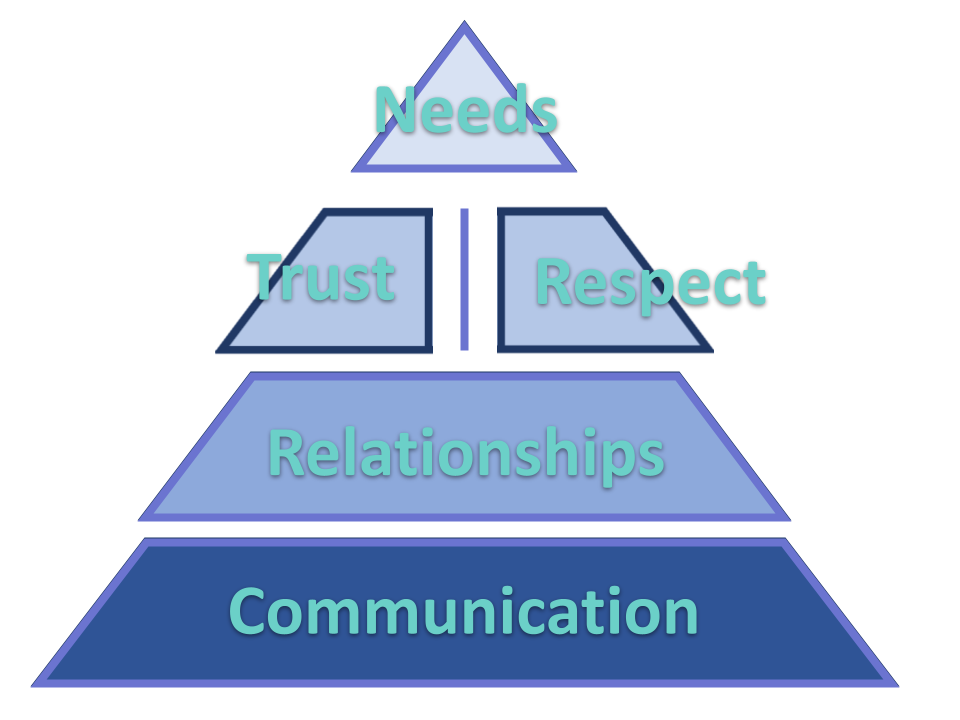
We focus on 5 elements that build on each other:
- Communication: This is the foundation of all leadership. Communication is the act of exchanging information, ideas, or emotions between people in a way that creates shared understanding.
- Relationships: We strive for High-Quality relationships. Relationships in leadership are the intentional, trust-based connections between a leader and their team members that enable collaboration, respect, and growth. Don’t confuse this with friendship.
- Trust: Trust in leadership is the confidence that a leader will act with reliability, integrity, and consistency.
- Respect: Respect is the consistent acknowledgment of others’ value, contributions, and humanity through actions that demonstrate fairness, empathy, and selflessness.
- Needs: Needs are the personal and situational conditions that allow someone to bring their best self to the team, revealed through trust and respect, and acted on through intentional leadership.
Leader-Member Exchange (LMX) Theory
Most people have experienced the difference between a manager who knows them and one who doesn’t. That difference has a name: Leader-Member Exchange theory.
LMX is the idea that the quality of the relationship between a leader and each team member directly affects that person’s performance, satisfaction, and loyalty. High-quality relationships — built on trust, respect, and genuine communication — produce better results across the board. Lower-quality ones quietly drain a team’s potential.
At Archway, we teach leaders how to be intentional about building high-quality relationships with everyone on their team, not just the people they naturally click with. That means understanding in-groups and out-groups, bridging gaps, and making sure every team member feels genuinely valued.

What this means for you:
- Lower turnover and higher team loyalty
- Stronger communication and fewer misunderstandings
- A workplace culture where people actually want to show up
Situational Leaderhip
There’s no single right way to lead. The best leaders know how to read a situation and adjust their approach accordingly. That’s the core of Situational Leadership.
Depending on someone’s experience, confidence, and the task at hand, they might need clear direction, collaborative coaching, hands-off support, or full autonomy. A great leader knows which one is called for — and isn’t stuck in just one mode.
We teach the four core leadership styles:
- Directing: Clear, specific guidance for team members who are new or uncertain.
- Coaching: Two-way dialogue and encouragement for those building their skills.
- Supporting: Sharing decision-making with capable team members who need confidence.
- Delegating: Stepping back and trusting experienced, self-sufficient team members.